
Supporting your child’s speech at home: 7 everyday habits
No special lessons needed – everyday talk, books and play can all help speech develop.
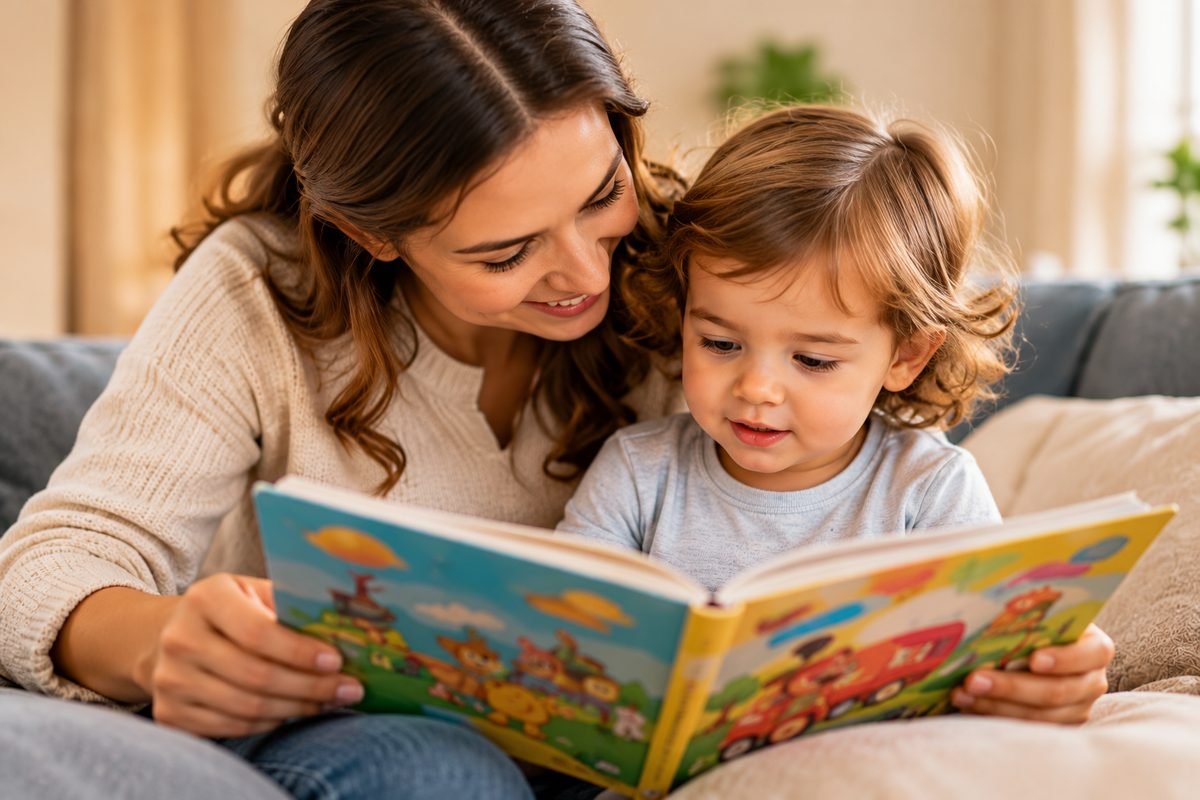
Children learn to talk mostly through everyday interaction. These simple habits need no special materials and fit into any part of the day.
- Narrate what you do. While cooking or walking, describe it in simple sentences: “Now I’m cutting the apple.”
- Stretch the sentence. If your child says “car”, you say “Yes, a big red car.”
- Ask open questions. Instead of yes/no, ask “What happened? What did he do next?”
- Read every day. Talk about the pictures and let your child turn the pages.
- Wait. After asking, pause for a few seconds – children need time to answer.
- Sing songs and rhymes. Repetition sticks and helps children hear sounds.
- Swap screens for talk. Less screen time means more chances for real conversation.
Model, don’t correct
If your child says a word wrongly, don’t make them repeat it. Just say it correctly yourself: “Yes, the ball fell.” This keeps them keen to talk.
When to see a specialist
Every child talks at their own pace. If you’re worried about your child’s speech, hearing or understanding, talk to your paediatrician or a speech therapist – early advice often brings peace of mind.
These tips are general information — not developmental norms, a diagnosis or individual medical advice. If you have concerns, consult a paediatrician or child psychologist.